
February 19, 2026
January 2026 Amber Grant Awarded to Flour Sack Studio, LLC
Flour Sack Studio, LLC
Woman Entrepreneur:
Wendy Nowakowski, Founder & CEO
Her Website:
https://floursackstudio.com/
Video Transcript
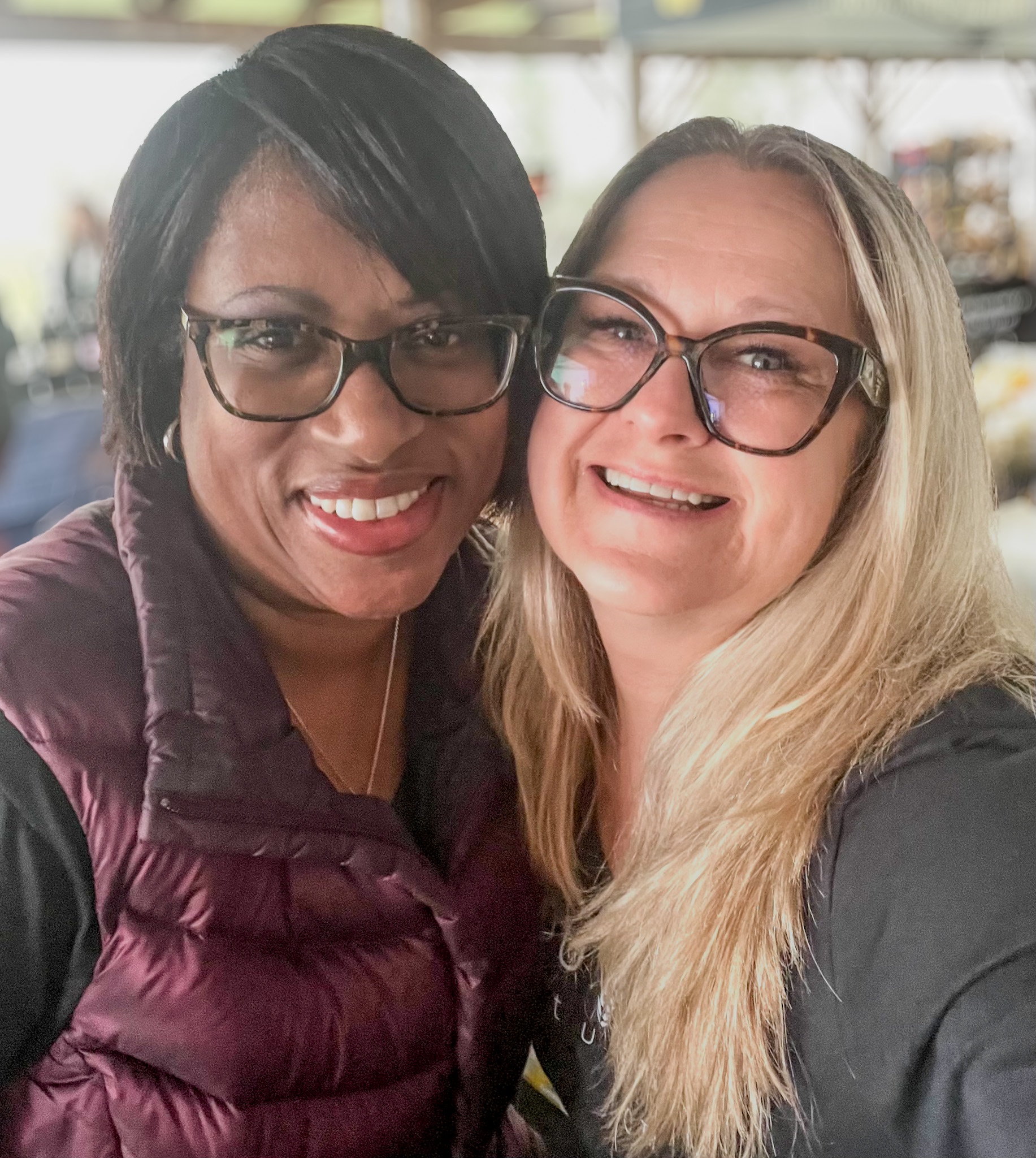
Marcia: Welcome to a chat with our January 2026 Amber Grant winners, Wendy Nowakowski and Gwen Roney of Flour Sack Studio LLC. The Amber Grant is open to all women business owners in the U.S. and Canada.
I’m Marcia Layton Turner. I’m one of several advisory board members, and every other month, I get the wonderful opportunity to talk to our winners. So, I always love this part. Thank you for being here today.
Wendy and Gwen, could you tell everybody just a little bit about your business, about your company, where you got the idea…what it is?
Gwen: So, Flour Sack Studio started about 16 years ago. Wendy is the founder, and I came in as a partner in the business. And I started off just volunteering with her, and it was just amazing. The material is waste-not, want-not material. And all we’re doing here is bringing back a vintage from yesterday. This is something that is used in the homes of regular Americans. They’re used in restaurants and wine bars.
So, what it is: a 100% flour sack towel, and we usually manufacture our material overseas. We would start overseas in India, Egypt, a couple different places overseas. And they were manufacturing 100% cotton, lint-free towel. What we wanted to do was bring that back to America.
We’ve shown that it’s definitely a 100% product that many people want. We’ve proven that during craft events, and we are generally the top-tier vendor at most of these shows.
So, what we did was we started searching for manufacturers in the U.S.; we wanted to use 100% American cotton. We did a lot of research, and it took quite a while because, as you know, a lot of manufacturing has gone overseas. But we landed a company here, and we have produced our first flour sack towel made of 100% cotton, it’s lint-free, here in the U.S.
That’s how we got started. Wendy might want to double back and add a little bit to that and give you a little bit of history of the flour sack and why this is so important to us.
Marcia: Can you tell a little bit about its lint-free properties; it sounds like lint-free is really the key to the advantage of the product. Why is that so important?
Wendy: One of the best things you can get from a lint-free towel is a multi-use towel. So, you can use it for anything from drying your dishes, lint-free, to cleaning windows and mirrors without lint. When you’re at a restaurant or a bar, and you’re having a fancy gourmet meal, and someone comes out and presents a plate to you, they will plate it using a towel very similar to the ones that you see here. And they will wipe your plate, which again, no lint. And also the stemware. So, lots of crystal, lots of glass need to be literally lint-free when you’re being served at a restaurant. So, there are very few materials that will provide that.
And most of the materials that are being made today are going to be like a microfiber type of towel. We produced an all-natural 100% cotton, which is a non-scratch material that can be used on fine china to crystal to a Harley-Davidson chrome on a bike. When I say multi-use, the lint-free factor is one of the biggest features of that multi-use towel, which is something that is literally not available with any other fabric that you could purchase in any other arena when it comes to milled materials.
So, for example, if you were to just buy material to make a dress or a skirt or an apron or something like that, that material is not lint-free. It is not designed lint-free. And it’s just more or less designed to hold the weaves together, to be dyed multiple different colors and patterns. But what we’ve focused more on is the all-natural purposing of a towel that was once used as a waste-not, want-not thing.
You would purchase a large flour sack that had actual flour inside it. And during the early World War times, they would manufacture that same material with patterns on it. So, after you would consume what was inside the bag, then you would make your wares from it. So, whether it started out as a shirt or a dress and an apron, then it would be worn down, passed down to all of the children that you had, and then made into tea towels or curtains or tablecloths or things like that.
And what they realized is that this material that they were making, it was made to last. It is a very, very long history of this material that dates back to the early World Wars, and they used to use that even for bandages in the war, postal bags, in medical purposes.
What started to happen is after the World War was over and we came back and we were still using the flour and manufacturing what we did, the Food and Drug Administration kind of came in and said, “No more packaging in material. We want to control it. We want to put it in paper. We’re going to do it that way.” And unfortunately, at that time during that era, it was the cause for all of the mills to go out of business.
So, very much like the butcher companies that were out there, they had to conform to new standardized regulations from their side. And so over here, what happened, the United States sold their machinery to second- and third-world countries that were then making the same material that we once made here. That was the only place I was able to get material like that after the last mill here closed down. So, we worked with them for a while, but what we realized is that they don’t have the heritage or the history behind that.
We decided that we wanted to use not only an American company and us being, of course, American, to actually make the towel, we wanted to use American cotton. So, everything that is going into this towel, from the fibers themselves that start with the cotton that is grown here in the Carolinas to how it is manufactured in a bolt of material to then finished and then even decorated.
And when we say decorated, we do offer lots of different options to our customers. Some people are going to want really fun things like this for their kitchens. I don’t know if you can see that. Probably not.
We do full embroidery. We do full print. Any method of decoration works very well on these. And so, of course, when it comes to companies like restaurants and fine bar establishments, they usually want them personalized. They want them with their logos on them. And they are very well seen behind the bar, whether it is used as an apron around their waist or whether they’re plating your food at a restaurant.
So, we’re a full-service company. We offer everything here in the United States. We are a women-owned company operated here in the state of Maryland. And what we would like to see is everyone have the opportunity to be able to purchase these towels as an alternative to the throwaway paper towels that are on the market today.
These are highly absorbent. They are so thirsty. They absorb all of the moisture very, very quickly. And then it’s also a porous towel, which means it dries quickly so you can dry over and over, whether there are glasses at Thanksgiving, at Christmas, or when you have people visiting.
Or, even better yet, you use this as a tool in your kitchen. You can strain with it. You can brine with it. You can make yogurt, dumplings, cheese. It’s really an unlimited number of uses. And one of the favored uses, and it dates back to the earliest time it was being done, was when you would use it to rise bread. It was also used to roll out and is used today to roll out your pastries like cookies, pumpkin rolls, and jelly rolls.
So, when you utilize this towel, now you don’t have to use that Tupperware rollout mat that’s curled up in the back of your cabinet. I mean, we love it. Don’t get me wrong. I love me some Tupperware, but no longer do we have to use that.
It is an American classic that we are taking through and through that is going to give somebody an opportunity to save money when they purchase one of our towels. So, the more of our towels that you have that replace the throwaways that you have in your kitchen and in your bathroom, not only will you be saving money, you will have something that will last you literally a lifetime. And that’s what we’re doing is we’re preserving an American classic.
Gwen: And so these towels are, as Wendy was saying, they are reusable over and over, and you pass them down from generation to generation, actually. And so you do wash them up. They can be bleached. So, if you’re using them in your kitchen and a lot of people like to sanitize their towels, they can be bleached and brought back to the kitchen to be used over and over and over again.
Marcia: Wonderful. Well, let’s talk about, as you were getting started, were there any resources that you found especially helpful?
Wendy: Oh, my gosh. Well, there are so many, honestly, but what I would really have to say, two things come to mind, and I have to mention them both. I was raised by my grandparents, and it kind of goes back to what I was raised and how I was raised. So, these were around me all the time, and when I realized that I couldn’t buy them anywhere, that was something that really made me think that I might be able to bring something like that back. And I was raised by two wonderful grandparents that told me that I can be and do anything that I want to do. And I really believed them.
I really surrounded myself with powerful women like Gwen, my partner here, that I could not have gotten to where I am today without her. If I had to pick a favorite podcast on a personal note, I would say Mel Robbins from “Her Side” is just so powerful and that she just really does her thinking and letting things go and moving on. Sometimes we carry so much and we hold ourselves back with our limited thinking or the thinking of other people, and I think what we have to do is put that aside so that we can start to recognize that we are all pioneers in this industry.
Anyone who steps out with an idea like that has got to be somebody who surrounds themselves with powerful women who can pull upon their heritage and how they were raised and maintain a strong belief. But I think if we were to answer jointly, I would say that Jesus has led us through the hardest times of our life and that we are God’s girls. So, I make no apologies for that statement. I am most proud, and I feel that wind underneath my wings whenever I need that. So, Gwen, I will let you answer, too, but that was just my personal answer there.
Gwen: So, as I said, I came in to partner with Wendy in the flour sack business, and I was just amazed. I was blown away from the beginning. When you talk about waste not, want not, and I realized what I could do with this towel and I didn’t have to buy Bounty paper towels over and over and over again, it just blew my mind. So, I just took them in and I just started using them in my home as if it was probably the next best thing that just hit the market.
And I just started doing a lot of reading, like Wendy was saying, because I’m not the best chef in the kitchen kind of person. But when I joined this business, I started going into cookbooks and going back into history books and trying to figure out what kind of things I can do with this towel, how it was used.
I have hundreds of them probably around my house for different purposes. I love them. And again, I just feel like Wendy’s an awesome partner. She’s very creative and she has a lot of energy to just want to bring something back to the United States. And it’s being done by women, so we love that.
Marcia: So, Wendy and Gwen, what marketing tactics, maybe one or two, that you found that has worked really well for Flour Sack Studio? What has captured attention?
Wendy: Gwen mentioned it. She tied into it early on in our conversation, and that was that we have really gone just up and down the eastern seaboard at most of the juried shows, where literally people who are coming are looking for something really uniquely made. So when you come into an arena like that, you’ve got everything. And when they come to your table and you are able to just be there, be the ones that are telling them what this is and how to use it, they are automatically struck back to a time gone by.
And you know, they say that memories sell. This is beyond a memory. This is something that sustained our country. We gave this as food, as aid to Belgium in the early World War. There were many people and families that were affected and benefited from these. And so we get the opportunity to talk about those times. We get to talk about how they were used. And now we can talk about how we’re going to bring it back to America.
Everyone there is at a juried show. They don’t want anything that’s a buy-sell. They don’t want anything that comes from another country. They want to meet and greet the artists. Gwen and I get to go. We demonstrate our product with mostly the kitchen aspects. It’s very easy to understand how to take a towel and to wipe your windows and your mirrors, but we do often bring those things with us so that we can show them.
We’ll say, “Hey, give us your glasses.” We’ll show them, and they’re literally without the lint, they understand, having used this. But when we start demonstrating the use and how to roll out the cookies and how you decorate on the sheet. And there’s no more broken edges. You know, we start to talk about that.
You know, our booth starts to grow and grow and grow, and then there’s other people coming in and they grow and grow. And then not only do they want one, they want to buy them for somebody else, because they realize like, “Oh, my gosh, this is what we did and this is how we used them.” So, that is probably, I would say, over the last 15 years, we have literally solidified what we felt strong enough to be able to say, “Hey, we’re not just hitting restaurants and companies like that. We’re hitting individual consumers now.”
And now we realized that we don’t really just have one little niche in the market. We have the market, because the product speaks for itself. It’s unlike anything else. And when we go there, and we demonstrate it and they can touch and feel it, like you were talking about, be in their face there and letting them see the product and holding the product in their hand and, “Oh, my gosh, it comes from this, and this is what we can do with it.”
And they keep asking, “Why can’t we buy these on the shelves? Where are they? Where can we buy them at our grocery stores? I want to buy them. How about QVC? Have you hit Shark Tank?”
Gwen: Yeah, we get that a lot.
Wendy: “When are you going to go on Shark Tank?” Everybody thinks Shark Tank’s the answer, you know.
Gwen: And I’m going to segue into something here that Wendy’s mentioned, and that is when we’re at this event, like you said, we bring the crowd through our demonstration. And then you’ll get someone to say, “Oh, I love them. I’ve been purchasing them for 10 years now.” And they literally come back. They’re not coming to feel or figure it out. They are coming to just say, “Do you have any new designs? Or how many plain? I need…” And so when you have a crowd around, that kind of validates that this is a good product, you know?
Wendy: That’s true. We don’t say anything. A lot of times, we’ll get, “I need 20 of those and give me…”
Gwen: And so we don’t say anything. They’re picking them up in stacks, so they know that this is a validated quality material here.
One of the other things we’ve been doing with the manufacturing is we’ve started to come back here to the United States, looking for that manufacturer who could weave this towel. Come to find out, they actually do marketing as well. So, the owner of the company is very interested in this product and wants to know more. So, we have some plans to meet with them to give them a few more ideas about our flour sack.
You can go to Amazon or to other platforms, and you can find flour sacks anywhere. Ours are different. And what our customers have spoken to us and told us and shared with us is they’re not the same. And we know they’re not because we use a special patent or recipe, so to speak, and it has to be the same every single time. Otherwise, it’s not going to strain the same. So, we have to be able to, like I said, use our current clients, our customers, to be able to come in and speak for us. And a lot of times, we just stand back and watch it fly off the table.
Wendy: I think with the demonstration, they were introducing the idea of commercials and then QVC, because they do a great job in demonstrating it over and over and over and over and over. So, we’ve begun the process of looking into those and, of course, signing up on those portals. It’s a whole process. It’s a whole other thing that has to be done.
Gwen: And I think that was RangeMe.
Wendy: Yeah, I think that’s one of the partnering portals that literally will allow you to reach out to all of the different places that might want that.
Marcia: Excellent. Well, if there was one thing that our community of fellow women business owners could do to support your business, what would that one thing be?
Gwen: I think just come out. Just try our product, and I think it’ll speak for itself. Help us out. Just purchase a towel and share your experiences.
Wendy: Yes, I would say go to floursackstudio.com. I would say order your first towel. And it creates a way for us to ship them anywhere in the country. And look for us soon, hopefully, on shelves in your grocery stores near you. But if you see us out and about, have any questions, or if you would like to talk to us, just word of mouth to let people know that it is coming to you and we’re bringing it back for you.
Marcia: Fantastic. It’s been so interesting chatting with you both. I really appreciate your time. Thank you for sharing your stories, and congratulations again for being our January Amber Grant winner.
WomensNet Blog
Resource Center
Amber Grant Winners
Read winner interviews and see what advice they have to offer for other women entrepreneurs.
How the Amber Grant Works
- Apply right now by telling us your story. No lengthy, complicated forms.
- Our Judges pick three $10,000 Amber Grant winners each month.
- Three of our 36 monthly winners will be awarded our $50,000 Amber Grant at the end of the year.
 Get application & business ideas on the WomensNet blog »