
July 21, 2026
June 2026 Business Support Services Grant Awarded to Art Easely

Art Easely
Woman Entrepreneur:
Megan Schaugaard
Her Website:
https://www.arteasely.com/
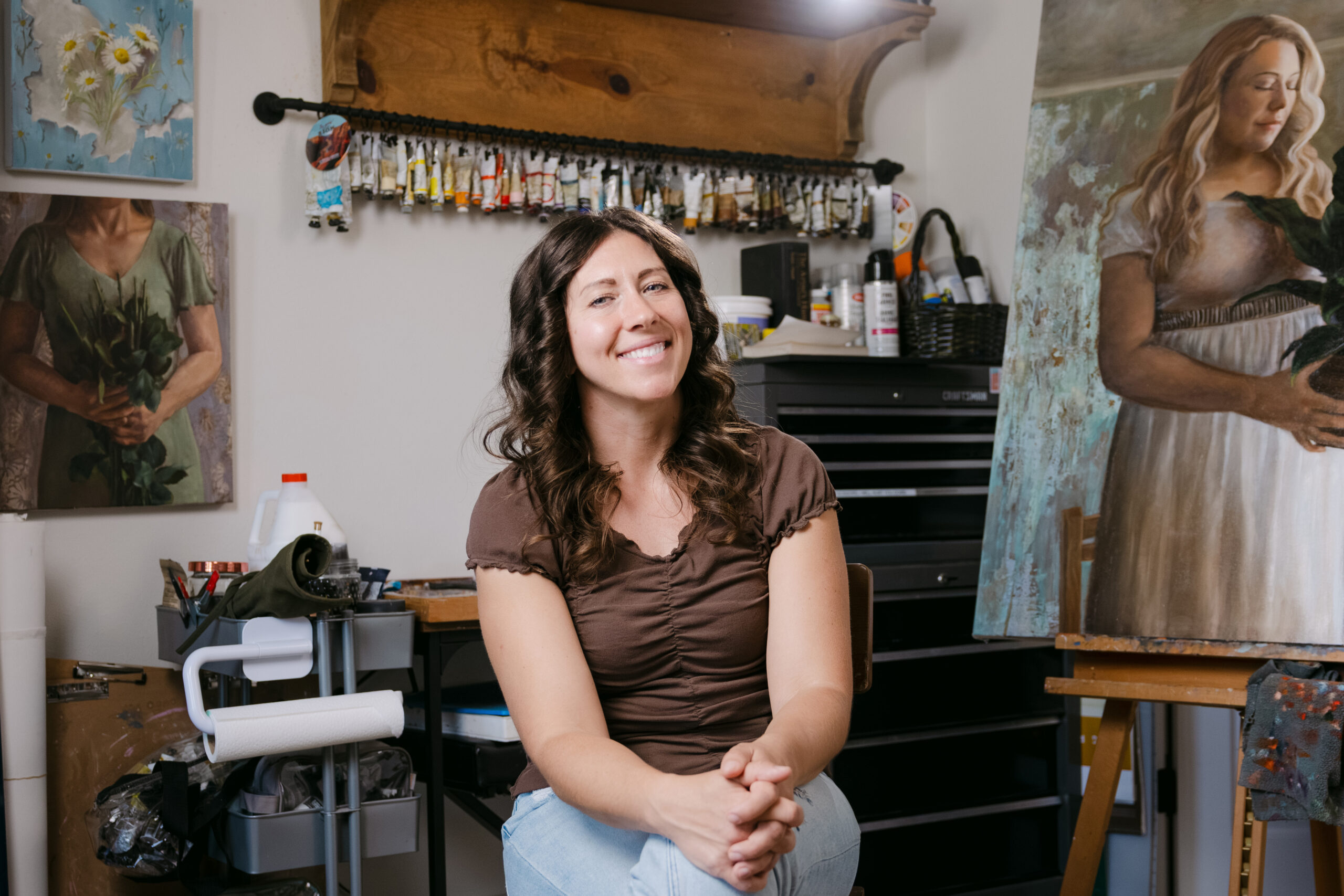
We’re excited to announce the June $10,000 Business-Category: Business Support Services Grant recipient. Congratulations to Megan Schaugaard, founder of Art Easely.
Recently, WomensNet Advisory Board member Marcia Layton Turner sat down with Megan for an exclusive interview. You can listen to their conversation and view the transcript below.
Video Transcript
Marcia: Welcome to a chat with our June 2026 Business-Specific Grant winner. Megan Schaugaard of Art Easely. The business-specific category changes every month. For June, it was business support services.
I’m Marcia Layton Turner. I’m a member of the WomensNet Advisory Board, and usually every other month-ish, I get the opportunity to learn more from our fabulous winners.
So let’s start from the beginning. Tell everyone a little bit about your company, Megan, including what you sell, where you got the idea, and how things are going.
Megan: Okay. Art Easely is a software-as-a-service product that is a platform for visual artists to be able to run their art business from one place. So, where this started, I guess, is I’ve always been a creative child, an artist from the beginning. I knew that I loved the arts. I went to school, took an oil painting class, fell in love with it, and just knew it was something I wanted to keep doing.
I got married after college and had some children, and I do art on the side. And then eventually, when our kids got old enough, like we had our daughter going into school full-time, and I thought, “I would love to get my MFA to teach art to other people, to spread this love for art and technique,” and I wanted to get an MFA. So I looked into schools, and really my dream school was in New York, where I really felt like I would get the skills for technical ability to be able to just really pursue what I wanted to do and then be able to teach it.
And I got accepted to the school that I wanted to go to, and COVID hit. And so my husband, he works as a developer, and he can work from wherever, and we felt like that was our original plan, to take our whole family to New York and just have an experience there while I went to school. But with COVID, he ended up staying here with the kids, and I went by myself. And so there was a lot of sacrifice there. Like obviously, nobody knew how long it was going to last, but I continued school there for two years, traveling back when I was able to. Of course, there were a lot of travel restrictions during that time.
But after graduating, I really appreciated the time there, and I had experiences that I really wouldn’t have had otherwise, like a really great group of mentors there. When I came home, I knew I absolutely wanted to make art, and I wanted to work at the college or in my hometown, but there were no open positions, so I took a part-time job there and also another job with Streamline Publishing for Fine Art Connoisseur and Plein Air magazines. And it was just too much for me to put together that whole… You know, you’re wearing so many different hats as an artist running a business, right? And so I thought, “Well, I can do my art on the side, kind of build that up.” But as I was working there, I noticed more artists running into these same problems that I was, where we’re trying to be entrepreneurs, and a social media manager. You’re having to keep track of so many files, like your artwork and your statements and bios, and keeping everything organized and websites up to date.
And so I noticed that there was a problem where we were just juggling too many things in too many different places. And so talking with other artists, I decided to leave Streamline, and I was talking with my husband, who’s the developer, and I said, “There needs to be a better way where we can keep track of all of our art business needs in one platform for artists, to just make it easy so that you don’t have to jump or bounce around, and it’s just one easy pathway to create an art business and make it sustainable.” And so we put together a platform for visual artists to be able to keep all their artwork records and their images, important resume records, contacts, event management, sales, integrations to e-newsletter providers, the ability to push to social media, print-on-demand. We’ve found a partner to help us with that, and then also everything just seamlessly pushes to our website, so they’re not keeping track and then having to duplicate and do the manual entry to go into another area. And we’ve also worked with art organizations on the other end doing the calls for entries to make this a more seamless process for those submitting to calls for entry, as well as those who are doing the calls for entry.
Marcia: This is so interesting because my dad was a fine artist and he did not keep great records. I wish that your software had been around 20 to 30 years ago, because I’ve come across paintings of his that nobody knew existed, because there was no central repository for all that information. So, great idea.
Marcia: Next, I’d love to talk about the resources that you found especially helpful as you were thinking about your company. What’s one resource that you might suggest to women in your shoes a few years ago? Was there a resource that you found really helpful?
Megan: I really feel like mentors at school, like my thesis advisor. He spoke a lot about business, I think, and put those ideas in my head, making me know that it’s not just about your technical skills, because you can be an amazing artist and still not have the tools to make a business out of something that you love and are passionate about. But also, I feel like listening to podcasts about other founders. I think when we have our mindset shifted and thinking about, “Oh, this is how they did it.” And of course, it’s a different path for each person, but I really appreciated SaaS podcasts, so software as a service podcasts. I really like the “Anatomy of a Dream” podcast. They interview CEOs to talk about the breakdown of how their business began and what they did to execute.
But also, I feel like one of the most important things I think is mindset. I’m not necessarily a type-A, take-command type of person, and so thinking about myself as a CEO, I felt a little bit of imposter syndrome. And I remember reading the book by Simon Sinek that’s about Start with Why, and I felt so much more confident knowing that I was passionate about something and that I have a passion for people, and I want to make a difference, and that’s what you can start with. And I think that that helped me get the confidence that I needed to move forward and just know, “I can do this.” I think it’s just a lot of the mindset and just surrounding yourself with those people with that mindset, too.
Marcia: Now let’s talk a little bit about marketing, because I think that’s where a number of entrepreneurs get tripped up. They don’t really know how to invest their time or their resources. What is the best marketing strategy that you’ve discovered so far?
Megan: I have to say that by far we’ve seen the most success by just talking with artists, and just getting their feedback, and then them loving it and sharing it with other people. But also, we went to a convention where it is focused on plein air artists, and it was such a natural conversation while we were there, talking about the problems that they felt like they ran into, and that we were a solution for that. I think by far being at the event in person and being able to talk to them one-on-one, because I feel like we’re in a very digital space, and I understand we can’t be in person all the time, but being able to have that human connection, and them understanding that I knew about the problems too that they were going through, and that we’re building something to help.
Marcia: And now finally, what’s one thing that our community, which is tens of thousands of women business owners, what’s one thing we can do to support you? Whether that’s visiting your website, checking out your products, signing up for a newsletter. What’s one thing?
Megan: We are looking for other people who are passionate about helping artists, and we want to collaborate with them to build the communities that we need in this space. Like, we’ve built a platform, we have the tech and the tools, and now I think we need wonderful people who care about the arts. And especially in this day and age, where AI is kind of taking over so much, I really think we need to keep the arts alive. And I do feel like there’s more of a value for handmade and unique items, something that resonates with being human, and we just want to build a community around that. So it’s like having all the people on our platform but then also people who are coaching artists and we want to be able to help them, their artists, to have the resources that we’ve built and to be able to just train artists so that it’s just a more sustainable business in the arts for those helping the arts, organizations, people who are passionate about the arts. And then of course, also visiting our website and following our social media. Those types of things can help support us as well. But I think definitely spreading the word about, if you know a visual artist, that we have the answers, and we’re excited about building a community that’s excited about the arts.
Marcia: Excellent. Thank you so much for sharing your stories with us, and congratulations again on being our Business-Specific Grant winner for June.
WomensNet Blog
Resource Center

Amber Grant Winners
Read winner interviews and see what advice they have to offer for other women entrepreneurs.
How the Amber Grant Works
- Apply right now by telling us your story. No lengthy, complicated forms.
- Our Judges pick three $15,000 Amber Grant winners each month.
- Three of our 36 monthly winners will be awarded our $75,000 Amber Grant at the end of the year.
 Get application & business ideas on the WomensNet blog »