
December 17, 2025
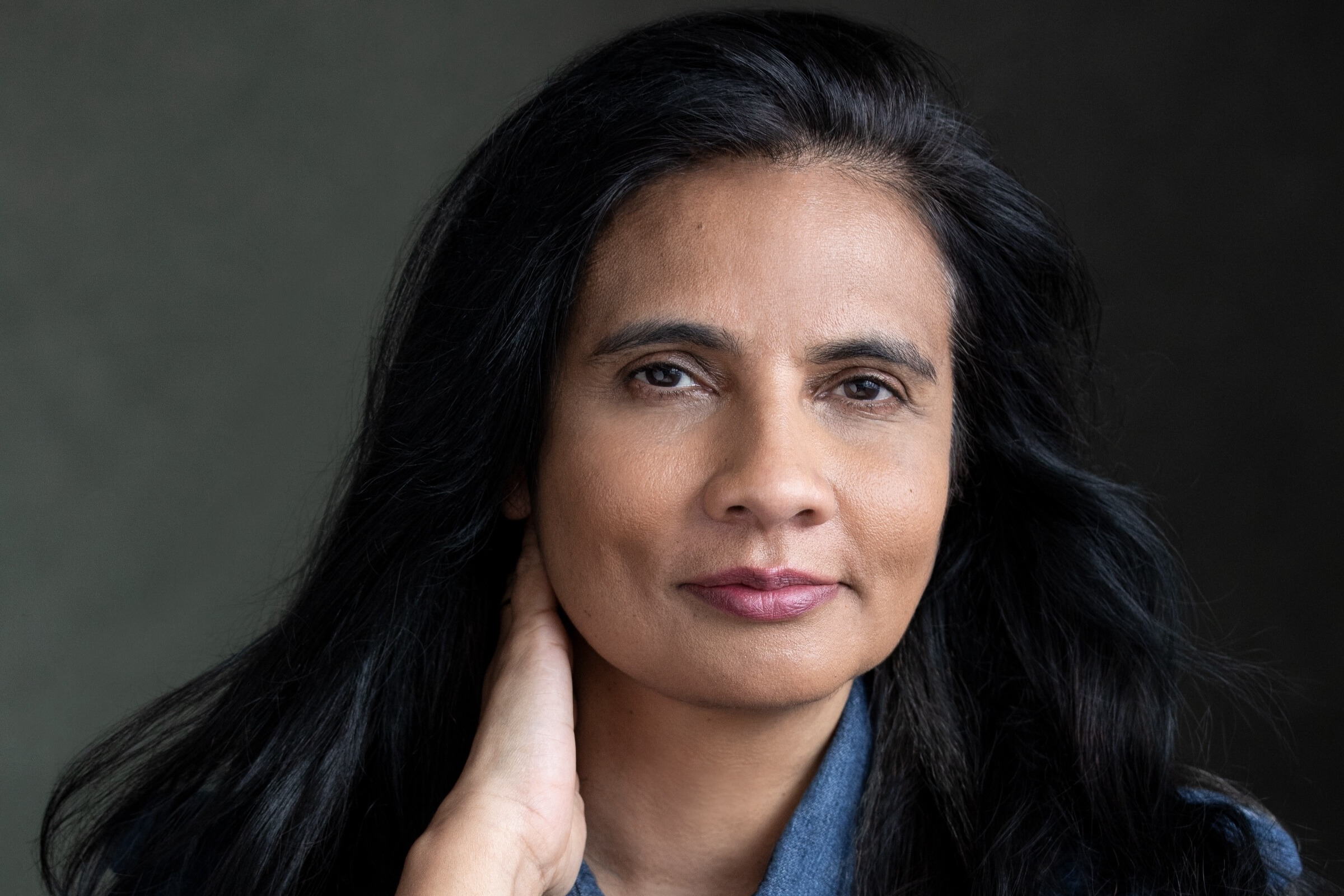
November 2025 Amber Grant Awarded to No Women No Spice

No Women No Spice
Woman Entrepreneur:
Shilpa Tiwari
Her Website:
https://www.nowomennospice.com/
Video Transcript
Marcia: Welcome to a chat today with our Amber grant winner for November 2025, Shilpa Tiwari of No Women No Spice. The Amber Grant is open to all women business owners in the U.S. and Canada.
I’m Marcia Layton Turner, and I’m a member of the WomensNet advisory board, and I have the great opportunity to speak with our winners every other month. Thank you, Shilpa, for making time to chat with me today. I know you’re very busy.
So, let’s start off with an easy question. Could you tell everybody a little bit about your company and where the idea came from to start it?
Shilpa: Well, thank you. Thank you for giving me the opportunity to talk about what I do and why I do it. So, my company is No Women No Spice. We work with women farmers in Tanzania to support their agricultural practices, so we are really looking at agroforestry, which is agriculture and forestry mixed together, which is better for the soil.
So, continuing that practice and not monoculture, which is where you cut down a forest and you plant one type of crop. And we are supporting them specifically because, in Africa, women are responsible for 70% of food production. And if they had access to financial and productive resources, we would increase farm yields by 20% and reduce hunger by 15%, because women are also the caretakers of our community and our families. Years prior, I had been working on agriculture, topics related to agriculture, and women in a variety of different countries, and so I was familiar with the role women play in food and food security. But that statistic in particular really stuck with me.
So when I was in Tanzania, I was working very closely with women farmers, procuring spices from them directly, creating a system that allows them to work effectively, and also was thinking about how to ensure there was safety because sometimes when you focus on women in certain regions of the world or communities, it can also increase harm. A lot of studies have found that certain microcredit enterprise programs—in Bangladesh, a PhD researcher found that, as they focused more on women, the men in the community were becoming very angry because they weren’t getting the attention and the access to funds that they also felt they needed. So the focus on women was actually increasing violence against women in the community.
So, when we work in these communities, we really take a larger point of view in terms of how to ensure that this benefits the entire community. We work specifically with women, but how do we ensure that those benefits extend to the entire community and everyone feels good about what’s happening?
We’re registered in Tanzania as a company and in Canada as a company. And the reason we did that was often when we create companies in the global south, we extract all the money out of that economy, and we really wanted to ensure that resources circulated in that economy as well. So we sell our spices in Tanzania and Kenya, and then we also sell them in Canada, North America, and we hope to expand.
In terms of our spices, we have black pepper, cinnamon, and cardamom. The packaging is FSC-, Forest Stewardship Council-certified, paper. That means that the trees have been sustainably harvested to make the paper, and it’s recyclable. The dye is a vegetable dye, it’s not chemical. So, we were thinking not just about the impact on women but really thinking about the entire lifecycle. Then, also with the image, we were really interested in focusing on women as bold creators of our future and not victims. So, when we created this, we did a lot of consultation with women in East Africa in terms of the representation. We wanted to ensure they felt represented in a way that was accurate and that they felt embodied and represented who they are. So, prior to actually even starting, we did a lot of consultations just on the brand and the packaging, and then started working with women farmers in Tanzania, and now we sell in Tanzania. We sell in Kenya. We sell in Canada and the U.S.
Marcia: Wow. So complex. I’m impressed.
So, let’s talk now about, as you were getting started, or even as you’ve learned along the way during your journey, what was a resource that you found really helpful in starting or building your business?
Shilpa: I think that’s a great question because I think we all are often looking for resources and things that can support us as we build. For me, it was really building a group of women from a variety of different industries, creating sort of an advisory board. I have five women in particular who bring different points of view to me, and so I connect with them at different times.
The other thing I’ve been doing a lot recently is listening to podcasts. There are a few that I really enjoy listening to that are all kind of focused on how entrepreneurs build their business.
And then the third thing is a book I recently read. I was in Vermont, and I went to Ben & Jerry’s, the ice cream [manufacturer], and they have a similar ethos in terms of what they think business should be. So, I bought both their books. One was the book right before they started, so when they were in their 20s, and hadn’t even really come up with the idea. The second book covers the period when they were acquired by Unilever. So, I’ve read the first book, which was interesting because they’re in the food space as well. I’ve read many books that are biographies of entrepreneurs, and also books on particular businesses. That one resonated the most because it felt like I was experiencing some of the same things that they were experiencing, and so that was really helpful.
The other thing I just want to mention is that I find it gets really lonely for me. Being an entrepreneur can be very isolating. And so the advisory board has been great because I’m someone who needs to talk things out as I’m going through different parts of the business. Also, I find that there are days when you just think, “Oh, is this really going to work? Am I stupid for thinking that this would actually work?” And so sometimes you just need someone to say, “You are doing a great job. Keep going.” And this grant is one of those moments of confirmation, like, “Yes, someone sees me. Yes.”
So it meant so much to me. I can’t even explain what it did to lift my spirit. So, I just want to say that what you do through WomensNet is really meaningful to us women entrepreneurs, and it gives us that boost that we really do need sometimes because it can be a slog.
Marcia: Thank you. That’s so good to hear.
Well, let’s talk a little bit about marketing, because that’s really one topic that small business owners—men, women, everybody—they are always trying to get better at marketing. So, has there been a particular marketing strategy or tactic that you found really works for your business and that you might recommend other business owners look into?
Shilpa: So, my strategies were: first, focus is your friend. We could be everywhere. We really thought carefully about where we wanted to be. Second was relationships. And so in terms of how we built in Tanzania, I spent two years in Tanzania, building up the supply chain. I don’t speak Swahili, and I’m not Tanzanian. So, in the work I’ve done, building relationships helps move things forward, authentic, true relationships.
How we broke into Tanzania was by starting with safari lodges. In Tanzania and Kenya, there’s the Serengeti, so there are a lot of high-end safari lodges. They have retail gift shops where people want to buy something to take home. And that’s why the packaging was [so important], because you can stick this in a backpack or in a suitcase, and it doesn’t take up a lot of space, and it won’t break.
So we built a relationship with one lodge. They have five in Tanzania, and we were in their retail store. And then from that, we talked to them, and they introduced us to the head chef, who is responsible for the five lodges in Tanzania. But this company owns 24 more in Kenya. And so when we talked to the chef, she loved our story. So, she’s the head of all the chefs and all the lodges, and loved the quality, because we didn’t just want a story. It had to also be outstanding, chef-grade quality, and she loved it.
So we were able to move from retail into their kitchens. We really leaned into building relationships with a few vendors and thinking of them more as our partners, and really working with them to build a product that made sense.
And so focus is your friend, relationships, and then also transparency. We are very transparent about how we do things, what we do, and sharing information. We want more businesses to think about impact and be sustainable. So, we don’t really hide anything. You want to know something? Come to us, we’ll tell you because we want more businesses. And so, really thinking about a mindset of abundance and not scarcity, and how do we build more businesses that are going to create a future that works for all of us.
Marcia: Very smart. To wrap up, what is one thing that the WomensNet community could do to show support for your business from afar?
Shilpa: That would be to follow us on Instagram, follow us on LinkedIn, and tell your network about us. I find sales work better when you hear about the product through someone you know and trust. And so we really rely on people using our product and then telling other people about our product. I find that’s one of the best sales strategies for us, at least. Thank you.
Marcia: And what’s your Instagram handle? Is it @nowomennospice?
Shilpa: Yes, @nowomennospice.
Marcia: Excellent. Well, thank you so much for sharing your amazing and intriguing story with us. And congratulations again on being our November Amber grant winner.
WomensNet Blog
Resource Center

Amber Grant Winners
Read winner interviews and see what advice they have to offer for other women entrepreneurs.

How the Amber Grant Works
- Apply right now by telling us your story. No lengthy, complicated forms.
- Our Judges pick three $10,000 Amber Grant winners each month.
- Three of our 36 monthly winners will be awarded our $50,000 Amber Grant at the end of the year.
 Get application & business ideas on the WomensNet blog »