
November 19, 2026
October 2026 Amber Grant Awarded to The Data Love Co.

The Data Love Co.
Woman Entrepreneur:
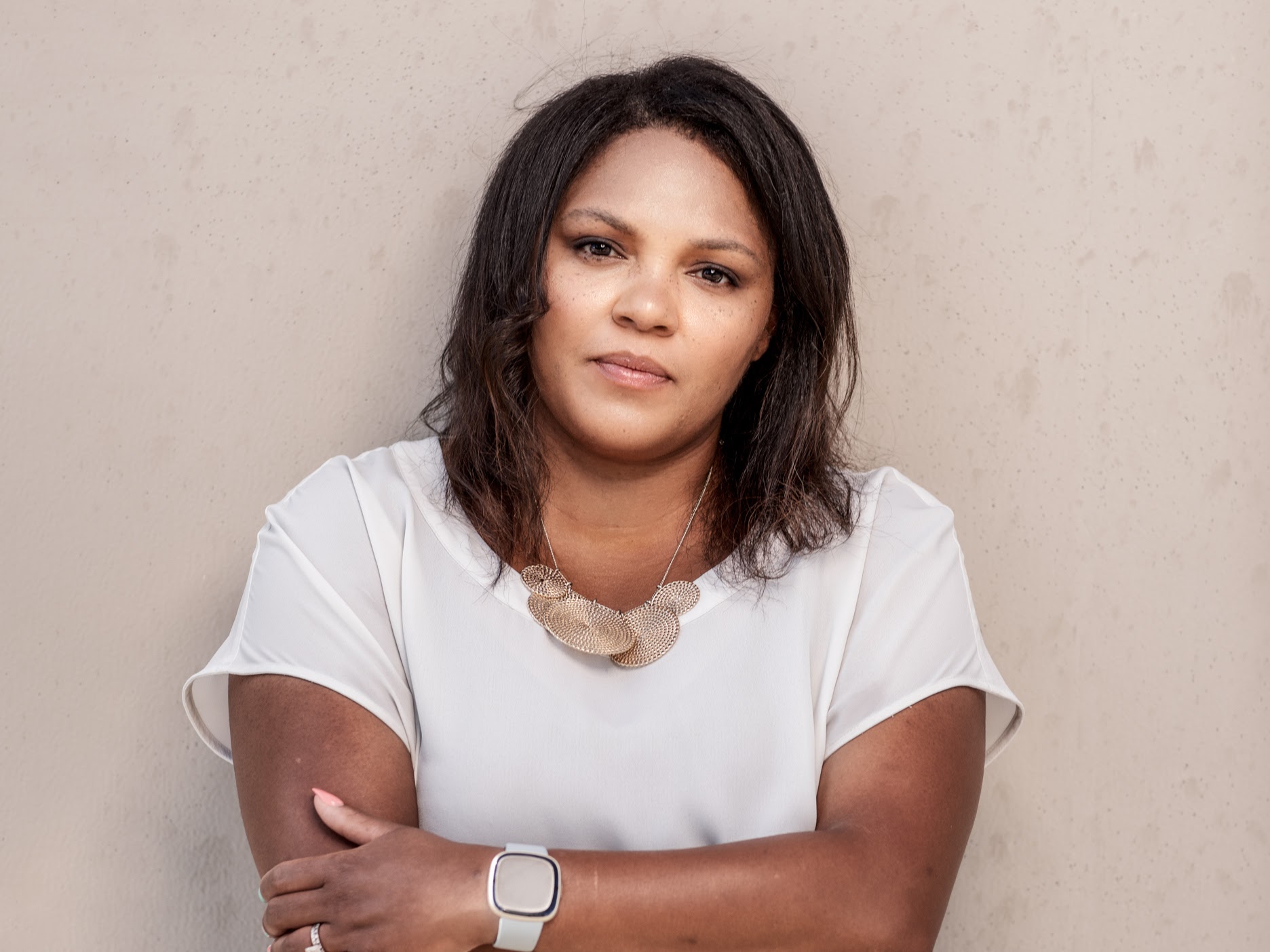
Jasmine Motupalli
Her Website:
https://dataloveco.com/
We’re excited to announce the October $15,000 Amber Grant recipient. Congratulations to Jasmine Motupalli, founder of The Data Love Co.
Recently, WomensNet Advisory Board member Jama Hernandez sat down with to Jasmine for an exclusive interview. You can listen to to Jasmine’s answers and view the transcript below.
Video Transcript
Jama: Hi, everyone! My name is Jama with WomensNet, and today we’re excited to introduce our October 2026 grant winners. We’re looking forward to having a conversation with you and getting to know you and your businesses a little better. To get started, we have our Amber Grant winner with us, Jasmine from Data Love. Will you please tell us a little bit about your business and what inspired it?
Jasmine: Hi, I’m Jasmine Motupalli, founder of Data Love Co. here in Denver, Colorado. I’m a West Point grad, an Army combat veteran, a mom of two, and a PhD candidate at the University of Denver, where I focus on human-AI collaboration in housing. Throughout my career, I’ve watched what happens when people doing the hardest work don’t have the information and intelligence they need. When I was a young military intelligence officer in Iraq, I led teams working on hostage rescue. We were able to recover dozens of hostages. That’s really where I learned that getting the data right meant people came home to their families.
In Afghanistan, I commanded a company in Logar Province. Some of the work I’m proudest of was with Afghan women. During my time there, we built an integrated, inclusive, and highly effective team. Through that, we were able to reach women in the community in ways that a standard patrol couldn’t. I was the only woman commanding a company in a brigade of 32 companies. My medics and I were able to teach first aid to about 40 Afghan women who were teachers and very connected to their communities. They were then able to go on and teach others themselves.
If you listen only to the people your systems are built to hear, you end up missing half the community. That was an important lesson for me.
When I came home, I had the opportunity to return to West Point to teach, and I co-authored research on predicting which Iraq and Afghanistan veterans would be at risk of becoming unhoused within the next five years.
Now, I’m in my second term on the Colorado Board of Veterans Affairs, where we review grants for organizations serving veterans across the state. Every cycle, I see good programs that can’t show what they’ve accomplished. The work is real, but they don’t have the evidence to prove it.
Then I met a food security nonprofit executive director while I was working as a fractional chief data officer for nonprofits and I sat next to her until 9:00 p.m. while she rebuilt the same fund report by hand for the fourth time. That’s when I decided that paperwork and reporting really shouldn’t be the reason a family doesn’t get fed or housed.
So, we built Dorothy. She’s our AI full-stack data agent, and she gives organizations that feed and house our neighbors the data they’ve never had. We named her Dorothy, after Dorothy Vaughan, a Hidden Figure and former NASA human computer. She lived by the same rule: show your work.
Jama: I could listen to you all day! What a wonderful journey you’ve taken. I absolutely love the name of your business, Data Love, because sometimes we think of data as being cold- just numbers on a page. But you bring warmth and love to it, transforming those numbers into something that can truly change people’s lives. And so thank you so much. So to continue our discussion, can you tell us what makes your business unique from other businesses that are doing similar things to, to you?
Jasmine: Yeah, so as I mentioned, Dorothy by Data Love is essentially a full stack data team in the form of an AI. The thing is, I’ve been on every side of this problem. I’ve been the analyst whose numbers had to be right. I’ve been the commander who had it, had to act on them. I’ve been a researcher studying who gets left out and a funder deciding where the money goes. And we built Dorothy for all of them. And so first is really trust. Most AI gives you a confident answer whether it’s true or not. Ours never does the math itself. Code that’s deterministic on the backend calculates every single number and cites it back to its source. If Dorothy can’t verify something, she says that she doesn’t have it. So the way I put it is if it can’t show its work, it’s a guess- and it’s been working!
A food access network spent over seven weeks building one report manually every year. Dorothy rebuilt it in about 20 minutes at 99% accuracy. And it was checked by a human analyst. The other 1%, she flagged for a person instead of guessing. Second is that people stay in charge. My PhD research is on how frontline workers weigh their own judgment against what an AI recommends- so we really build for that judgment. In Colorado, the nutrition team that scores school lunches, updates our tool themselves without an engineer. Third is who we build for and with. , If you think about a hospital system, they’re going to have a data team and if you think about a community-based nonprofit that focuses on housing and food, food security, they’ve basically got a spreadsheet and a dream.
I call back to the same lessons that I learned in Afghanistan. We build for the people the usual systems don’t reach. When I think of Data Love, I believe that we’re building more than just software. We’re building infrastructure for a more responsive public sector.
Jama: I can see how (with this tool) nonprofits and other organizations would be able to spend more time with the people that they serve rather than the reports that they have to generate for their funders.
Jasmine: Absolutely. Spend the time feeding your community, housing your community rather than writing about feeding and housing your community. Let’s give that time back. We’ve found that these organizations are spending up to a quarter of their time on average- some of them more, on reporting and compliance. We’re trying to take as much of that burden off the plate so that every donor dollar goes further and each nonprofit and state and local government agency that we work with can put more resources back into the community.
Jama: Yes, for sure. And even looking at what works- So donors are putting their dollars where it’s proven to work and not in just really good ideas. That can really produce change, so awesome.
WomensNet Blog
Resource Center
Amber Grant Winners
Read winner interviews and see what advice they have to offer for other women entrepreneurs.
How the Amber Grant Works
- Apply right now by telling us your story. No lengthy, complicated forms.
- Our Judges pick three $15,000 Amber Grant winners each month.
- Three of our 36 monthly winners will be awarded our $75,000 Amber Grant at the end of the year.
 Get application & business ideas on the WomensNet blog »